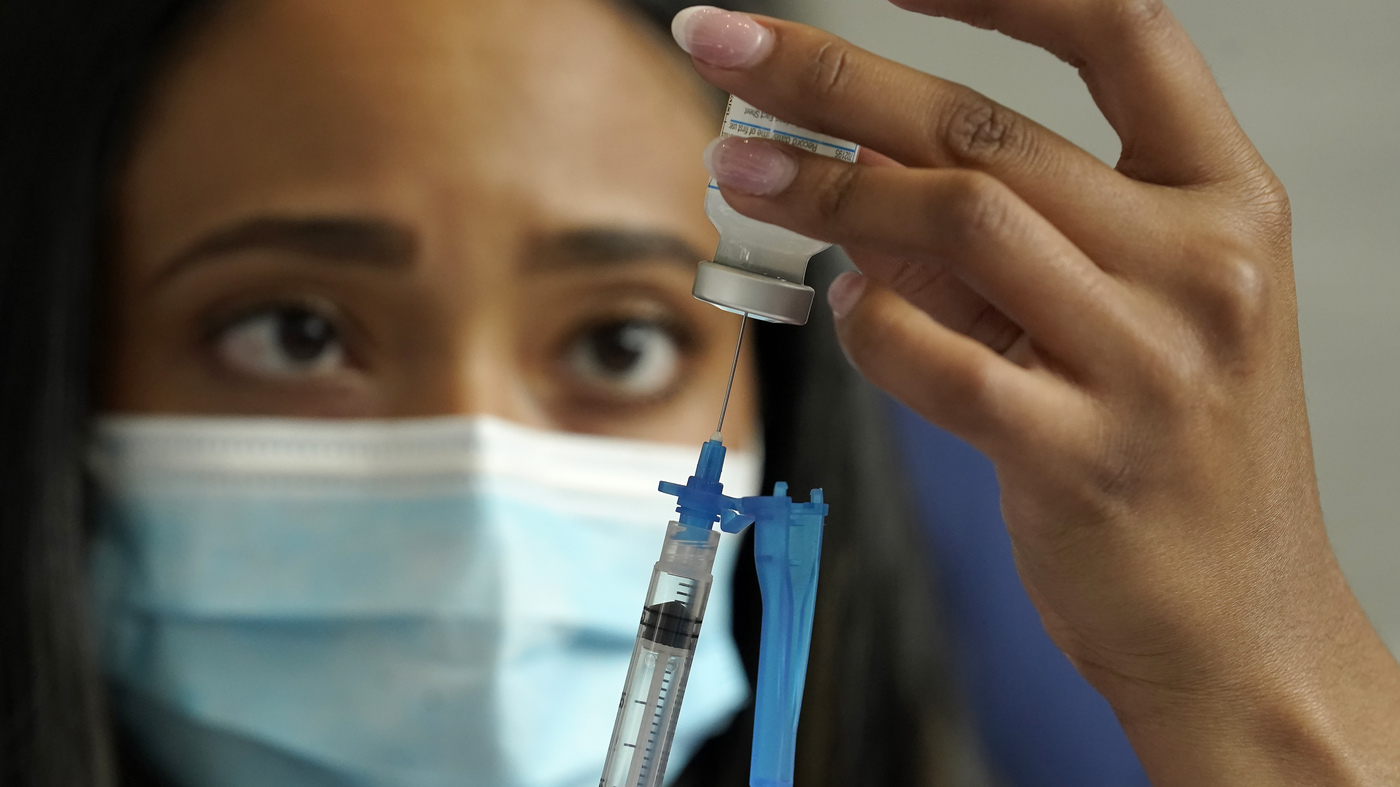
Yokasta Castro is a licensed practical nurse from Rhode Island. Minor changes in menstruation are linked to the vaccines, but they are still considered safe.
Steven Senne.
The timing of menstruation can be changed by vaccination. The effects are temporary, more like a sore arm than a serious adverse event.
"I think it's reassuring and also validation," says Dr. Alison Edelman, a professor of OB/Gyn at Oregon Health and Science University.
The work was published in the journal. The risks from COVID-19 remain high, so experts stress that individuals should get vaccinations.
When it came to reproductive health, the main focus was on pregnant women, not menstruation, despite the fact that clinical trials for the COVID vaccines looked for side-effects.
The stepsister that gets ignored is the menstrual cycle. It's not important in the grand scheme of things, but it is important to people.
Many people noticed changes to their menstrual cycles. A survey conducted by anthropologists found many reports of bleeding and heavy flows among people who hadn't menstruated in years.
Anti-vaccine activists used anecdotal reports from social media to make false claims that the vaccines were being used to spread infertility and depopulate the earth.
Researchers are looking at menstruation.
The National Institutes of Health decided to take a closer look at the vaccine after rumors of menstruation made them think.
The work was funded by the National Institute of Child Health and Human Development.
People can use the "Natural Cycles" app to track their menstrual cycles, and the data from the popular app was taken by the team. They were able to see a small shift in the time between bleeding.
The change in their menstrual cycle length with vaccination is less than one day.
People who were vaccinations experienced a slightly longer menstrual cycle around the time of their first and second doses.
It's not really anything to be alarmed about. She says that it proves that the vaccines are not affecting menstruation.
The study does affirm what individuals were reporting, she says.
The reproductive and immune systems are connected.
Researchers are not sure why the changes occur. Some signaling immune cells can affect the body's natural clock, and the immune system and reproductive system are linked. It's possible that a person's immune system might change because of that relationship. Whatever is happening seems to be short-lived.
She says that they haven't seen anything that's concerning about fertility or pregnancies. She says that COVID-19 can have an effect on health.
The risk of pregnant women getting Covid-19 disease is very high, and they're not protected.
There should be more data on how vaccines affect menstruation. The results of the other researchers should provide more data after the agency funded five studies last summer. Bianchi hopes that the additional research can look at a more diverse population than those that use the app, and also start to nail down other reported side-effects, including heavy periods and breakthrough bleeding.
Changes to menstruation should be added to the list of possible side-effects of the vaccines.
She thinks that it should be included because it is important to the public.