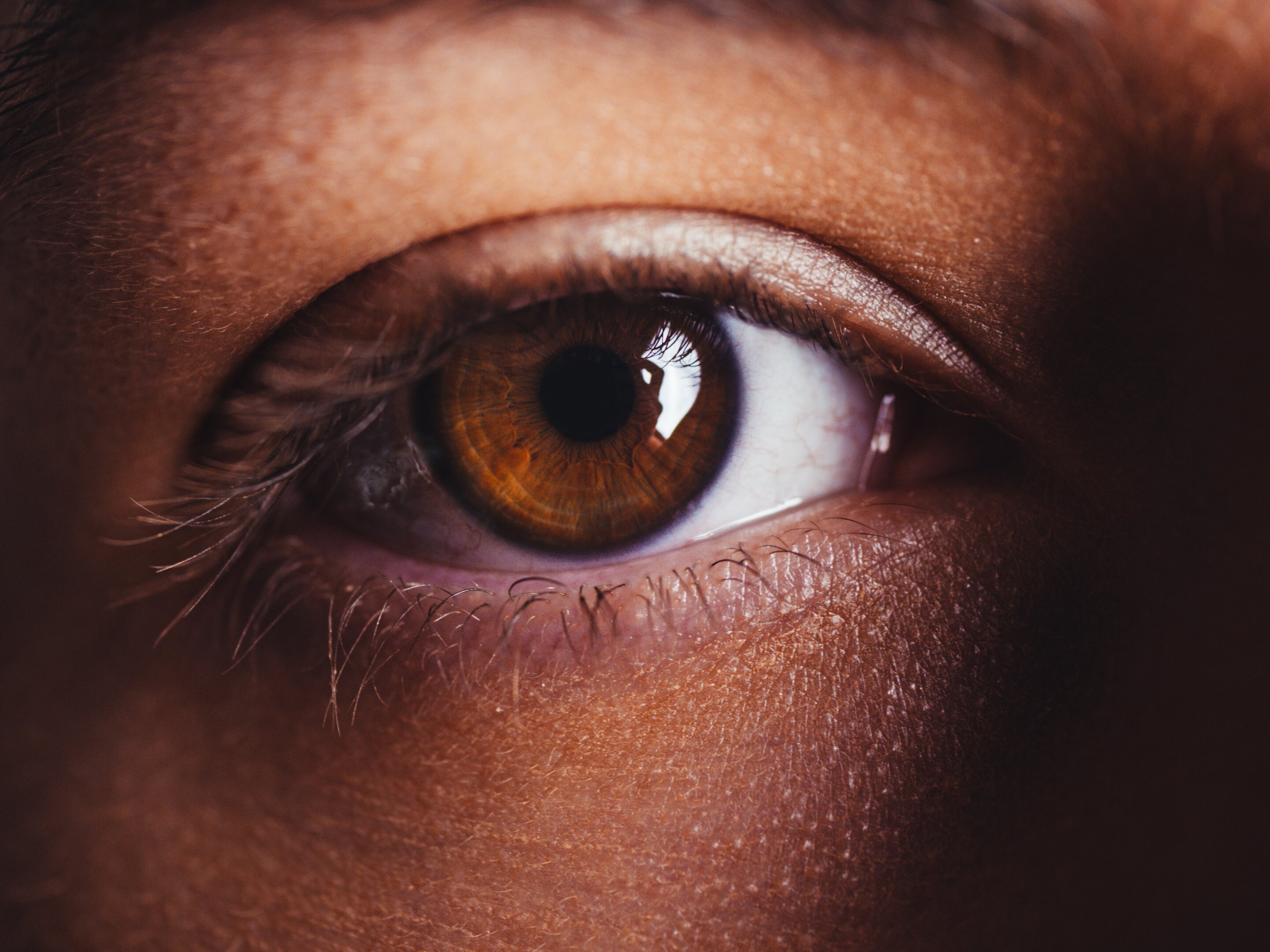
The CC0 Public Domain is a credit.
The rod cells of the eye help us see in dim light. The optical signal from the eye to the brain is relayed by the ion channel in the cell. A person will go blind if they have a genetic disorder. The way for innovative medical treatments is being prepared by scientists. The study is published in a journal.
Jacopo Marino is a Biologist with the Laboratory of Biomolecular Research. The photo cells are so sensitive to light that they can detect a single photon from a very remote part of the universe. The ability of our brain to translate these light beams into a visual impression is partly down to the CNG ion channels.
The ion channel acts as a barrier between the inside of the cell and the outside. The rod cells have a shell made out of a mixture of proteins and calcium. The gate to the cell is completely open in darkness. When light hits the eye, it causes a cascade of processes in the rod cells. This causes the gate to close, and the particles that are positively charged can no longer enter the cell.
This signal goes into the brain's visual cortex, where a visual impression is created. Jacopo Marino says that the idea of solving the structure of this channel was already worked on by Benjamin Kaupp and Gebhard Schertler. The two are co-authors of the study.
It paid off.
Diane had to extract the channel from the eyes of the cows. This was a very challenging task, as theProtein is very sensitive and quickly degrades. It is only available in small quantities in the source material. It took two years to get the right amount ofProtein to work with. Jacopo Marino says that they were both too stubborn to give up. stubbornness paid off in the end.
The three-dimensional structure of the ion channel was revealed by the scientists using cryo-electron microscopy. We looked at the native protein as it exists in the eye, instead of studying the structure of the ion channel. Diane Barret says that we are closer to the real conditions that exist in living creatures.
The development of treatments for genetic disorders that have no known cure is one of the reasons why a clearer understanding of the channel's natural structure is important. People are left blind by this disease. The body is unable to produce the CNG channel because of a genetic defect. When light hits the eye, the ion channel doesn't close completely, disrupting the cell's balance and causing the cells to die.
Jacopo Marino says that if we could find molecules that affect the protein in a way that the channel would completely close, we could prevent the cells from dying. Researchers are able to search for specific molecule after they identified the precise structure of theProtein.
There is an additional barrier.
A correctly functioning ion channel is only possible in this combination. The side arm of the B subunit seems to play an important role, as shown by the scientists in the study. This narrows the passage to the point where no ion can pass through.
Diane Barret says that it came as a total surprise. The only ones that were thought to be the only ones were the main gateways. It is interesting to note that the barrier found in the cow's eye is not the only one. All living creatures with an ion channel in their eye have the same position in theprotein. It must be essential for the functioning of the channel as it has been preserved so consistently.
The structure of the native CNGA1/CNGB1 CNG channel from bovine retinal rods is the subject of a paper by Diane C. A. Barret. There is a DOI titled " 10.1038/s41594-021-00700-8".
Nature Structural and Molecular Biology is a journal.
The rod cells of the retina help us see in dim light.
The document is copyrighted. Any fair dealing for the purpose of private study or research cannot be reproduced without written permission. The content is not intended to be used for anything other than information purposes.